News
Published over 7 years ago. See the latest and most current information on News.
A Consolidator Grant of EUR 2 million has been awarded to Mainz University physicist Dr. Mustapha Laatiaoui to support his research in the field of atomic and nuclear physics. He will be using the European Research Council (ERC) funds to develop a novel approach for optical spectroscopy of the superheavy elements.
Little information is currently available on superheavy elements, because they are difficult to produce, observe and analyse. The heaviest element that can be obtained in macroscopic amounts is fermium which has an atomic number 100; at present heavier elements can only be synthesised in single-atom-at-a-time quantities utilising large accelerator facilities. In addition, they are radioactive and rapidly decay, often within split seconds, which gives only little time to investigate them. Insights into superheavy element structures could be useful in the search for traces of even heavier elements, which might be created, for example, in neutron-star merger events.
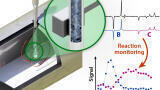
Dr Laatiaoui’s approach will employ the use of a laser beam, to excite positively charged ions instead of neutral atoms, which have been employed up to date when lacking tabulated spectral lines. "The search for optical resonances is a very complex process that requires a support from theory. The more precise the predictions indicate the position of the spectral lines, the easier it becomes to pinpoint the resonances," said Laatiaoui. If he can find the right wavelength to excite the ions, it will alter the ratio of ions in an excited metastable state to those ions in the ground state. The result will be easily measurable as the ions drift at different speeds through the apparatus to the detector.
Because the technique is based on laser excitation of particles and the analysis of their time of arrival at the detector, laser resonance chromatography (LRC) could well prove to be a highly sensitive and efficient detection method. Spectral lines can serve as powerful benchmarks for atomic model calculations in the region of the superheavy elements. In addition, they can provide insights into the properties of atomic nuclei, for instance, on the nuclear spin or the magnetic moment. With the newly identified fingerprint of a superheavy element, new routes opens up for astronomers trying to catch a glimpse of telltale photons from this element.
ILM 51.6 Sept 2026




 Product directory