News
Published over 7 years ago. See the latest and most current information on News.
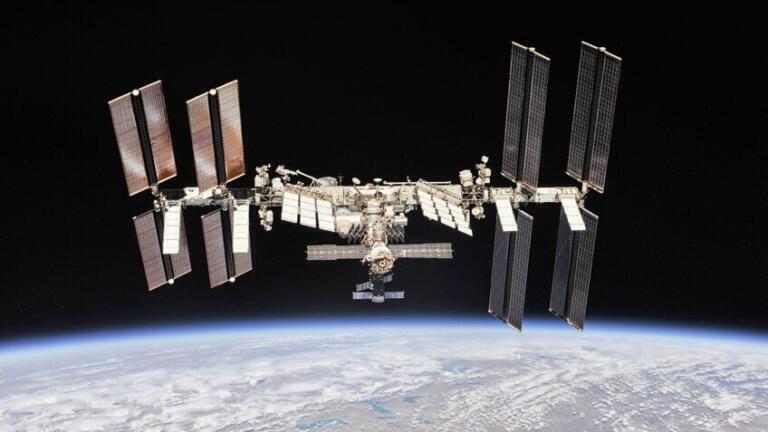
Prototype space mining devices kits using a ground-breaking technique are being tested by astronauts aboard the International Space Station helping to improve our knowledge of minerals and metals in space. Funded by the UK’s Science and Technology Facilities Council (STFC) the study could aid efforts for future other-world settlements to source minerals essential for survival in space.
Using microscopic organisms to recover samples from space rocks, such as iron, calcium and magnesium, tests using the device will be conducted in low gravity to find out how conditions on asteroids and planets such as Mars impact on the organisms’ ability to mine minerals. The rocks will be sent back to Earth to be analysed after the three-week experiment.
Project lead Professor Charles Cockell, of the University of Edinburgh, said: “This experiment will give us new fundamental insights into the behaviour of microbes in space, their applications in space exploration and how they might be used more effectively on Earth in all the myriad way that microbes affect our lives.”
This biomining process also has numerous applications on Earth, including in the recovery of metals from ores.
Astrobiologists from the UK Centre for Astrobiology at the University of Edinburgh developed the matchbox-sized prototypes – called biomining reactors – over a 10-year period. The STFC-funded project is led by the University of Edinburgh, with the European Space Agency and the UK Space Agency.
ILM 51.6 Sept 2026



 Product directory


.jpg)
.jpg)













.jpg)
