News
Published over 3 years ago. See the latest and most current information on News.
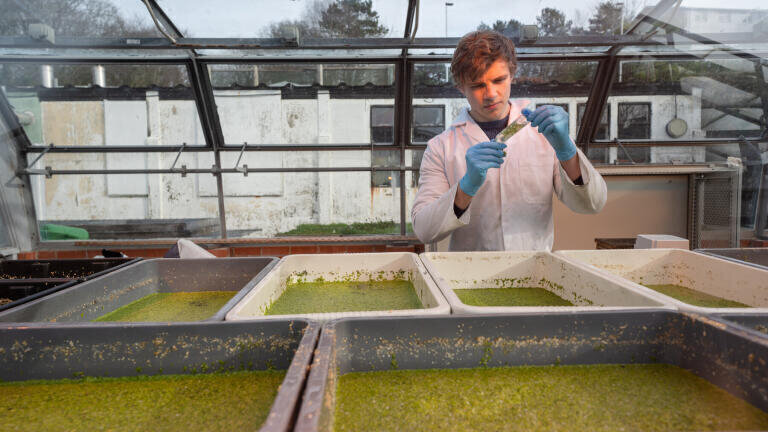
The potential for growing duckweed on slurry and wastewater produced by the beef and dairy industries is currently under investigation by researchers at the University of Aberystwyth and University College Cork (UCC).
A native Welsh plant described as a ‘miracle plant’ due to its fast-growing nature and ability to clean waste water, duckweed can also provide a valuable protein source for feeding livestock, which could reduce reliance on importing protein-rich feed such as soy.
With a single cow producing up to 60kgs of waste per day, storing slurry is a significant cost for farmers. Duckweed’s waste water cleansing properties could also help improve water quality in rivers and coastal areas.
Dr Dylan Gwynn-Jones, who is leading the project at Aberystwyth University’s Institute of Biological, Environmental and Rural Sciences (IBERS), said: “We are very keen for farmers and the wider agriculture sector to get involved in the project. With expected increases in global food production, there is a pressing need for agriculture to be carbon-friendly, while protecting water quality and biodiversity.
“By helping the agricultural industry develop technology to produce valuable green protein from waste, the research effectively allows farmers to ‘make money from muck’.
“Native duckweeds can make slurry a valuable resource. They are amongst the fastest growing plants, they are tolerant of ammonium, which is found in slurry, and they produce valuable essential amino acids that make it a promising feed-stock.”
The project applies the teams’ knowledge of hydroponics and waste management to develop plant growth systems supplied with nutrients sourced from animal waste.
The €1.46 million Brainwaves project (Bilateral Regional Accord between Ireland and Wales for Agricultural Valorisation and Environmental Sustainability) is part-funded by €1.16 million from the European Regional Development Fund through the Ireland Wales Cooperation Programme. It builds on previously successful collaborations between Aberystwyth and Cork Universities. Farmers and the wider agricultural sector can find out more and apply to be part of the project.
More information online
ILM 51.6 Sept 2026



 Product directory