Sample preparation
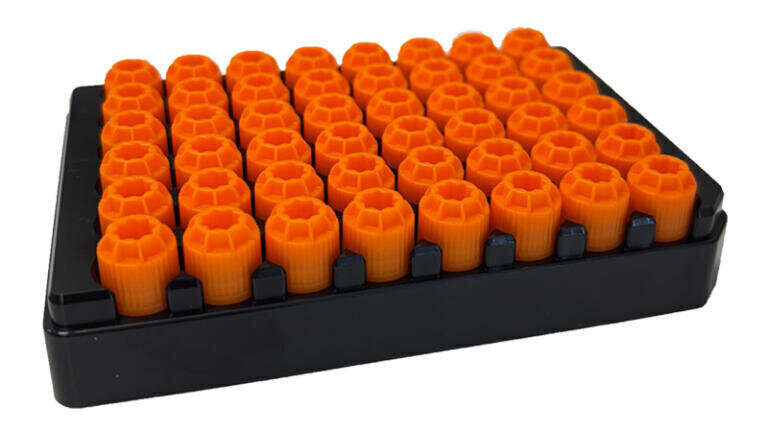
Azenta Life Sciences has broadened its cap carrier portfolio with the addition of 24- and 48-format options, giving laboratories greater flexibility when handling sample tubes at different scales.
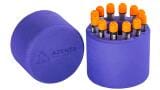
Designed to support automated capping and de-capping of SBS-format storage tubes, the expanded range helps labs reduce reliance on manual cap handling - improving efficiency while lowering the risk of cross-contamination. The carriers enable batch tube filling prior to capping, helping to speed up sample preparation without compromising sample integrity.
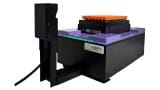
All formats are fully compatible with Azenta Life Sciences’ semi-automated and automated screw cap decappers/recappers, making them easy to integrate into existing workflows. The carriers are stackable, reusable, and supplied in cases of ten, with the option to purchase them empty or pre-loaded with low-retention screw caps to minimise sample loss.
The new 24- and 48-format carriers are manufactured from robust polycarbonate, providing the durability required for routine use in high-throughput laboratory environments.
With formats now available in 24, 48 and 96 positions, Azenta Life Sciences offers a complete cap carrier solution to support a wide range of sample storage and processing requirements.
More information online
ILM 51.6 Sept 2026




 Product directory