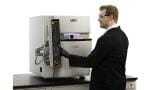
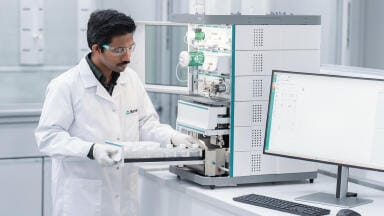
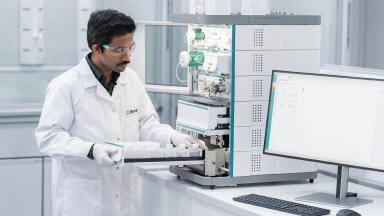
Thermo Fisher Scientific, Inc has announced that the company’s award-winning LTQ Orbitrap™ linear ion trap mass spectrometer was chosen by the Institut de Recherches Cliniques de Montréal (IRCM) for use in a new proteomics research approach that could profoundly impact the current understanding of the human proteome. The Thermo Scientific LTQ Orbitrap will play a major role in IRCM’s systematic analysis of human protein interaction networks, which has significant implications in the prevention and treatment of disease.
IRCM, founded in 1967, is a non-profit organisation devoted to studying the causes of disease, developing new diagnostic procedures and discovering preventive and therapeutic approaches that help to enhance quality of life.
A significant part of the organisation’s research focuses on proteomics – or the study of the structure and function of proteins, which are responsible for the physiology of living cells. The proteome of an organism is the set of proteins encoded by its genome. Since most of the proteins found in the human body are still uncharacterised, their function remains unknown and there is a need for a protein “road map.â€
Defining the maps of protein interactions that regulate cell growth, differentiation and disease progression is the overall goal of the Human Proteotheque Initiative (HuPI), a project conducted by Dr.
Benoit Coulombe, his research team at IRCM and his collaborators in various universities and research centers. These “HuPI-Maps†will be made publicly available as an atlas describing some fundamental
human molecular networks.
This atlas should become a valuable resource for scientists interested in basic biological and biomedical research because enzymes and other proteins carry most of the biological functions required for cell growth and differentiation. Central to the HuPI project is its experimental platform, including the Thermo Scientific LTQ Orbitrap mass spectrometer, which ultimately generates maps of protein interaction networks.
This information potentially can lead to future ground-breaking discoveries of new molecular tools for the prevention and treatment of disease. By characterising protein networks associated with a
particular disease, scientists believe they can produce multi-parameter descriptions needed to more realistically and reliably address issues such as the cause, the diagnose and, eventually, the cure of this
disease. Critical to this procedure is definitive protein characterisation, which is only possible with the high-resolution, high-mass accuracy MS/MS performance offered by the Thermo Scientific LTQ
Orbitrap hybrid system.


 Product directory