Clinical, medical and diagnostics
A newly CE-marked diagnostic assay is set to improve how clinicians distinguish between bacterial and viral infections, delivering results in around 20 minutes on routine immunoassay platforms.
The test, developed through a collaboration between Beckman Coulter Diagnostics and MeMed, uses a host-response approach to assess the body’s immune reaction rather than detecting the pathogen itself. This enables faster and more reliable differentiation at an early stage, when symptoms are often similar and clinical uncertainty is high.
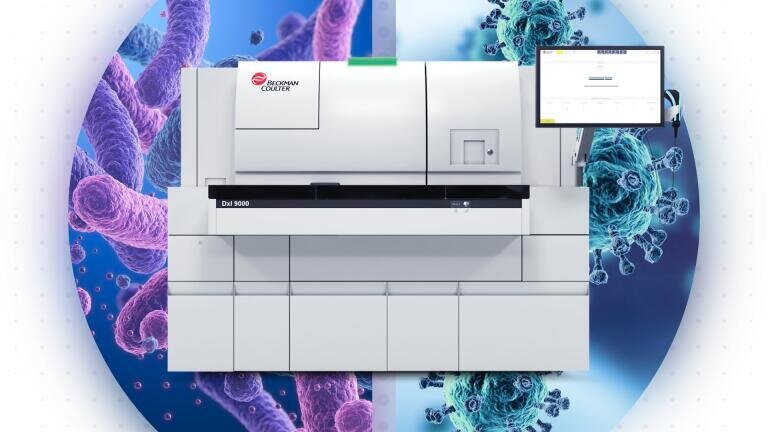
The CE 2797 mark under IVDR confirms the assay meets stringent European regulatory requirements, supporting its adoption across a wide range of clinical laboratory settings. Validated for use across Beckman Coulter’s installed base of DxI 9000 and Access 2 immunoassay analysers, the assay integrates into existing workflows without requiring additional infrastructure, allowing laboratories to generate rapid, high-throughput results while maintaining efficiency.
Early and accurate distinction between bacterial and viral infections remains a persistent challenge in clinical practice. Traditional diagnostic methods can take hours or even days, often leading to precautionary antibiotic prescribing. By providing timely insights, the assay supports more confident treatment decisions and helps reduce unnecessary antibiotic use, contributing to ongoing antimicrobial stewardship efforts.
Clinical and real-world data indicate that diagnostic uncertainty affects a significant proportion of cases, particularly in respiratory infections. Access to rapid host-response testing has been shown to influence clinical decision-making in the majority of these situations, helping guide appropriate patient management.
Beyond clinical benefits, health-economic modelling indicates that improved diagnostic clarity could reduce healthcare costs by lowering avoidable hospital admissions, unnecessary testing and inappropriate treatments. When applied at scale, this approach has the potential to deliver substantial savings while streamlining care pathways.
“By delivering rapid, highly reliable bacterial and viral differentiation on routine immunoassay systems, we’re empowering care teams with timely insights to guide treatment decisions while optimising laboratory efficiency using existing workflows,” said Melissa Naiman, Medical & Scientific Affairs at Beckman Coulter Diagnostics.
By combining rapid turnaround times with compatibility across established laboratory systems, the assay offers a practical route to improving diagnostic accuracy and efficiency in routine care settings.
More information online
ILM 51.6 Sept 2026




 Product directory























.jpg)