Laboratory events news
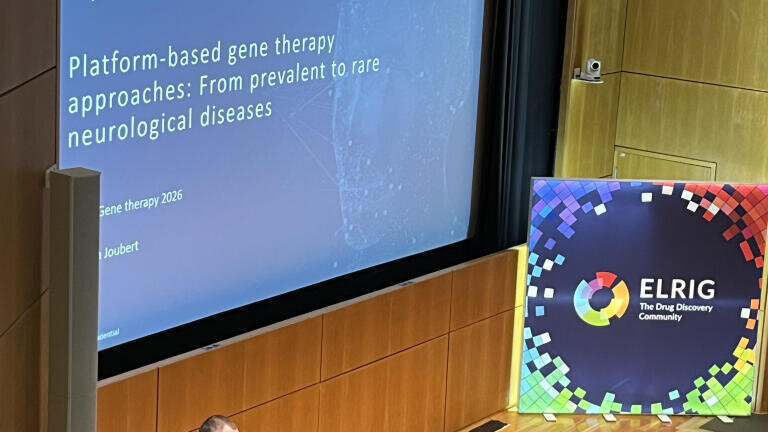
Dr Romain Joubert of AviadoBio explained how the company has used an adeno-associated virus gene replacement programme in frontotemporal dementia to build a broader microRNA silencing platform for neurodegenerative disease, with the aim to move more efficiently from rare genetic disorders to larger indications such as tauopathies and Alzheimer’s disease
AviadoBio has outlined a platform-based strategy for gene therapy in neurological disease, with the aim to move more efficiently from rare monogenic disorders to broader neurodegenerative indications. In a presentation on the company’s discovery and translational approach, Dr Romain Joubert, Senior Director of Discovery at AviadoBio, described how an initial gene replacement programme for frontotemporal dementia helped to shape a wider microRNA-based gene silencing platform for diseases including amyotrophic lateral sclerosis (ALS) and tau-related neurodegeneration.
The presentation focused on a long-standing problem in gene therapy. Conventional development often treats each disease as a separate undertaking, with distinct optimisation, manufacturing, delivery and regulatory work for every target. Joubert argued that this model can prove too slow and costly if the aim is to build a durable pipeline across multiple neurological diseases. AviadoBio’s response, he said, has been to keep as many parts of the therapeutic system constant as possible, while altering only the disease-specific targeting sequence.
The company first used frontotemporal dementia linked to progranulin deficiency as a proving ground for this broader strategy. Joubert presented AVB-101 as a gene replacement programme based on the observation that loss of progranulin function drives disease in a defined subgroup of patients. Frontotemporal dementia, he said, is one of the most common causes of early-onset dementia and can affect people in midlife, often with profound consequences for behaviour, language and cognition. It remains an area of substantial unmet need, with no approved therapy available to halt or reverse the underlying disease process.
In that setting, the aim of AVB-101 was to restore progranulin expression in the brain. Joubert said the programme used an adeno-associated virus serotype 9 vector and a promoter designed to support expression in the central nervous system after direct intracranial administration. He described preclinical work in mice, sheep and non-human primates that examined biodistribution, transgene expression and evidence of target engagement. These studies, he said, supported the mechanism by showing restoration of progranulin expression in relevant tissues and measurable levels in cerebrospinal fluid.
He then turned to the clinical setting. AviadoBio, he said, has assessed safety during the first six months after treatment while also tracking biomarkers, including progranulin expression in cerebrospinal fluid and serum, neurofilament light chain, and magnetic resonance imaging to assess structural brain changes such as atrophy. Joubert said the company had already dosed patients and intended to dose a third patient in 2026. He presented an apparent dose-dependent rise in progranulin expression as an early sign that the therapy was beginning to engage its target.
That programme then served as the bridge to AviadoBio’s broader platform ambitions. Joubert asked what should follow once a company has shown that it can deliver one therapeutic payload into the brain. His answer was that the field should not return to the beginning every time it moves to a different gene. Instead, it should build a modular system in which promoter, capsid, manufacturing framework and much of the development package remain stable, while the disease-specific sequence changes.
MicroRNA, he argued, suits that model well. Because the active sequence is extremely short, it occupies only a small fraction of the payload capacity available in an adeno-associated virus vector. That allows the surrounding vector structure to remain largely unchanged from one programme to the next. In practice, the same platform components can be reused while only the microRNA sequence that targets a specific messenger RNA changes.
Joubert then explained the biology behind the approach. Natural microRNAs begin as longer primary transcripts, which cells process in the nucleus into precursor forms and then into mature microRNAs. These mature molecules enter the RNA-induced silencing complex, which targets messenger RNA and reduces gene expression through repression or degradation. AviadoBio’s platform appears to adapt this biology by placing engineered microRNA sequences into a scaffold that preserves the features needed for correct processing and activity.
He also highlighted the importance of vector architecture. Joubert argued that more conventional microRNA expression systems are not ideally suited to adeno-associated virus delivery because they can create competition between microRNA processing and messenger RNA production. In his account, AviadoBio’s design separated these processes more effectively and permitted expression of both messenger RNA and microRNA from the same construct without excessive interference. He warned, however, that reporter assays should not be treated as sufficient proof of performance.
Joubert then described how AviadoBio has applied this platform to genes implicated in ALS, including ATXN2 and superoxide dismutase 1, as well as targets linked to TAR DNA-binding protein 43 pathology. The workflow began with in silico design of multiple candidate microRNAs against a chosen target, followed by screening in cell systems and more advanced validation in viral vectors. He stressed that the key lay in iterative optimisation rather than simple selection from an initial screen.
The programme then moved into in vivo testing. Joubert referred to studies in mouse models that expressed human disease-associated targets and said that adeno-associated virus delivery produced strong knockdown. He reported that relatively low doses could achieve around 50 per cent target reduction in some settings, which he presented as a meaningful degree of biological activity. He also noted that species differences remain important, even where there is high sequence homology between human and mouse targets.
Another theme of the talk was extensibility. Joubert said the platform could transfer not only from one disease gene to another, but also across vector serotypes, from human to mouse target sequences and potentially beyond the central nervous system to other organs such as liver and kidney. The later section of the presentation turned to common disease, especially tauopathies and Alzheimer’s disease. Joubert presented this transition not as a departure from the platform concept, but as its natural culmination. Rare diseases, he argued, help to establish the basic rules of delivery, dose, manufacturing and pharmacodynamic assessment, while more prevalent disorders offer larger patient populations and richer clinical toolkits.
AviadoBio’s AVB-406 programme, which targets microtubule-associated protein tau, was presented as the clearest example of this progression. “Instead of restarting everything for each programme, we wanted to keep the platform and change only what was disease-specific,” Joubert said.
That conclusion captured the main thrust of the presentation. AviadoBio did not present its future as dependent on one programme alone, but as resting on a repeatable platform that could support several neurological indications. In Joubert’s account, standardisation is not a constraint but an accelerant, with the potential to reduce development time, distribute technical risk and build a more scalable approach to central nervous system gene therapy.
ILM 51.6 Sept 2026



 Product directory
















.jpg)

.jpg)










.jpg)
