Laboratory events news
Professor Eric Alton outlined how a 25-year UK collaboration has pushed respiratory gene therapy from concept towards the clinic, with repeated-dose non-viral treatment showing proof of principle in cystic fibrosis and a lentiviral platform now under first-in-human evaluation
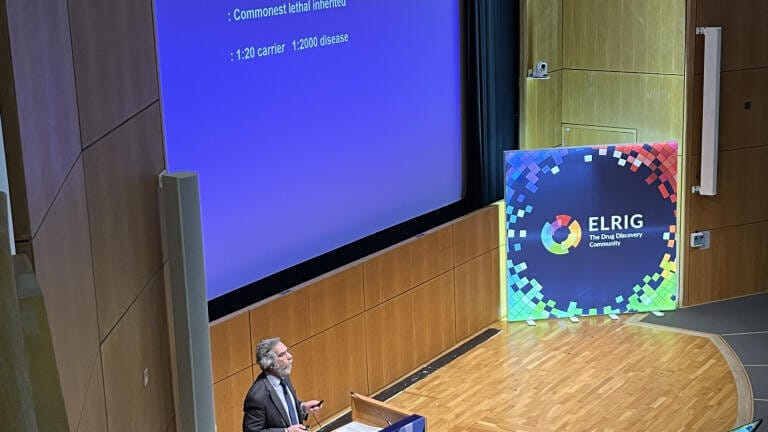
“The field has not yet reached its destination, but it has moved well beyond speculation into a period of genuine clinical promise,” Professor Eric Alton told delegates as he set out a long-term case for respiratory gene therapy as a viable, if still technically demanding, route to treat cystic fibrosis and other severe lung diseases. Professor Alton is the chair of gene therapy and respiratory medicine at Imperial College, London, an honorary consultant respiratory physician at the Royal Brompton Hospital and an NIHR senior investigator.
Speaking through the lens of the UK Respiratory Gene Therapy Consortium’s work, Alton described a translational effort that has extended across 25 years to overcome the biological barriers that make the airway epithelium a difficult target for gene delivery. He argued that repeated failures have reflected fundamental physiological obstacles, yet sustained collaboration has now taken both non-viral and lentiviral platforms into clinical testing for cystic fibrosis, while also opening routes to wider respiratory indications through industrial partnerships and the AlveoGene spin-out.
Alton began with cystic fibrosis, which he identified as the principal focus of respiratory gene therapy. He explained that the disease arises when a child inherits two defective copies of the cystic fibrosis transmembrane conductance regulator gene. Although multiple organs are affected, the most severe consequences occur in the lungs, where defective ion transport leads to thick secretions, chronic infection and eventual respiratory failure.
He acknowledged the impact of small-molecule modulators that improve cystic fibrosis transmembrane conductance regulator function but argued that these treatments remain incomplete. Around 10 per cent of mutations do not respond, some patients cannot tolerate therapy, and inflammation may persist despite clinical benefit. For that reason, he maintained that a need has remained for approaches that address the underlying genetic defect.
A substantial part of the presentation examined why this has proven so difficult. The respiratory tract has evolved to exclude foreign material, and each stage of delivery presents a barrier. Therapeutic DNA must pass through mucus, avoid mucociliary clearance, survive extracellular defence, cross the cell membrane, escape intracellular degradation, enter the nucleus and produce correctly localised protein. In cystic fibrosis, these challenges intensify because thick mucus and chronic infection further restrict access. Alton’s conclusion was clear: the airways are an intrinsically poor target, and success requires researchers to work against established biological design.
This challenge led to the formation of the UK Respiratory Gene Therapy Consortium about 25 years ago, bringing together teams at Imperial College London, the University of Oxford and the University of Edinburgh. Alton presented this coordinated model as a defining strength. The groups adopted a shared strategy, pooled data and resources, and operated in a manner closer to a pharmaceutical organisation than a conventional academic collaboration. He suggested that this structure reduced duplication and attracted sustained support, noting that the Cystic Fibrosis Trust had originally insisted on such collaboration.
He then outlined the consortium’s first major translational platform, a non-viral approach that progressed to clinical trials. The rationale was that although viral vectors offer efficient delivery, immune responses limit repeat dosing. Because cystic fibrosis requires lifelong treatment, repeat administration is essential. Non-viral plasmid DNA delivered in lipid carriers offers lower efficiency but permits repeated dosing. The consortium invested heavily in this approach, with extensive preclinical work, regulatory studies and early-phase trials to refine safety and dosing.
This programme culminated in what Alton described as the largest phase IIb multidose gene therapy trial in cystic fibrosis. Patients received monthly nebulised doses over a year in a double-blind, placebo-controlled study in London and Edinburgh. The placebo group showed the expected decline in lung function, whereas the treated group remained broadly stable, producing a statistically significant benefit of just under 4 per cent. He presented this as proof of concept that repeated gene therapy can affect a clinically meaningful outcome, while acknowledging that the effect size was insufficient for routine use. Greater delivery efficiency, he argued, remains essential.
That need drove development of a second platform based on lentiviral vectors. Alton described the appeal of Sendai virus, which enters airway epithelial cells efficiently due to receptor binding. Because Sendai virus itself does not support repeat dosing, the consortium incorporated its envelope proteins into a lentiviral backbone. This pseudotyped vector retains efficient entry while integrating into the host genome, offering the prospect of durable expression.
Preclinical data for this system showed efficient gene transfer across species, including human airway tissues, and durable expression in mouse lung for almost two years after a single administration. Promoter selection allowed control over expression levels, and repeat dosing appeared feasible, which he highlighted as a distinguishing feature.
Safety considerations formed a central part of the analysis. The vector did not appear to provoke significant inflammatory toxicity in the lung in animal models. Concerns about tumour risk from genomic integration were addressed through long-term studies, which showed no increase above background levels. Manufacturing has reached a scale suitable for clinical use, and nebuliser testing indicated that a substantial proportion of vector activity survives aerosol delivery. After around 15 years of development, the consortium initiated what Alton described as the first first-in-human trial of this lentiviral vector in cystic fibrosis in 2025.
Although cystic fibrosis dominated the presentation, Alton outlined a broader landscape that includes gene addition, messenger RNA, gene editing and lipid nanoparticle approaches, with around 15 programmes in development. He also highlighted ultra-rare surfactant protein deficiencies in newborns, particularly surfactant protein B deficiency, which causes severe respiratory failure shortly after birth. In this setting, he argued that airway delivery offers a direct and potentially effective route. In a knockout mouse model, the lentiviral approach restored survival to near-normal levels and outperformed several alternative strategies. To advance such applications, the group has established AlveoGene.
In closing, Alton set out the key unresolved questions. These include whether delivery should occur via the airway or bloodstream, how well animal models predict performance in diseased human lung, how dosing schedules should balance efficacy and toxicity, which airway cell populations must be targeted, and whether healthcare systems will support the cost of advanced genetic therapies.
His conclusion was measured but optimistic. Non-viral systems have demonstrated proof of concept and repeatability but may lack sufficient efficiency for routine use. Viral systems appear more efficient and may prove repeatable, although this requires confirmation in human studies. Despite these uncertainties, respiratory gene therapy has moved beyond theory and begun to address one of the most challenging delivery problems in modern medicine.
For further reading please visit: https://www.respiratorygenetherapy.org.uk
ILM 51.6 Sept 2026



 Product directory
















.jpg)

.jpg)










.jpg)
