Research news
Researchers have reported that CRISPR-Cas12a2 can be programmed to kill cells that carry a disease-linked RNA target while sparing healthy cells
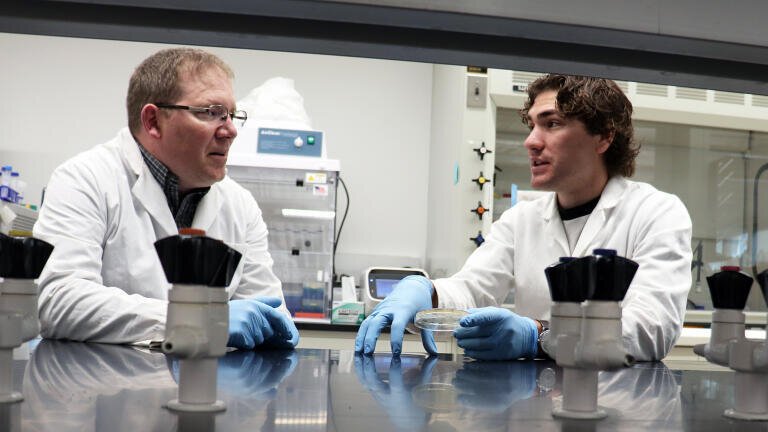
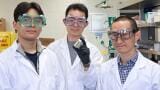
Scientists have reported how CRISPR-Cas12a2 can be programmed to identify specific RNA sequences and trigger cell death only when a precise target is present. The research was led by Utah State University (USU) biochemist Dr. Ryan Jackson, with doctoral candidate Kadin Crosby and collaborators from the University of Utah in the USA, and the Helmholtz Institute for RNA-based Infection Research and the University of Würzburg both in Germany.
“This is a holy grail of medicine and other sciences,” said Jackson, who is the ‘R. Gaurth Hansen’ associate professor in USU’s department of chemistry and biochemistry and co-corresponding author of the paper.
CRISPR, which stands for ‘clustered regularly interspaced short palindromic repeats’ is best known through systems such as Cas9. Cas9 uses guide RNA to bind a complementary DNA sequence and make a precise cut at that site.
Cas12a2 works differently by using a guide RNA to recognise a complementary RNA sequence. Once activated by that target, the enzyme does not simply edit a genetic sequence. Instead, it causes broad deoxyRNA damage inside the cell to effectively kill it.
“In contrast to activated Cas9, which makes a single precise cut in the bound DNA, RNA target-activated Cas12a2 shreds all DNA it encounters, effectively killing the cell,” Jackson said.
The key finding is that Cas12a2 appears to require a highly accurate match between the guide RNA and the target RNA before it activates. If the guide is not a perfect complement to the target, the enzyme does not trigger its destructive activity and the cell is spared. This level of discrimination could be significant for diseases such as cancer, where malignant cells may differ from healthy cells by only a single mutation.
“We demonstrate Cas12a2 can selectively kill cells containing a single-point mutant that causes cancer, while leaving cells without the mutant unaffected, with no observable side effects,” said Crosby, co-first author of the paper.
“In mice, our therapy reduced tumour volume by about 50 per cent after a single treatment,” he added.
The researchers said the approach could have wider implications because Cas12a2 can be programmed with a guide RNA to recognise almost any RNA sequence. This could make it possible to target cells that carry cancer-associated mutations, viral genes or other disease-linked molecular signatures.
“Its goal is not to correct anything,” said Dr. Yang Liu, assistant professor of biochemistry at University of Utah Health and co-corresponding author.
“Instead, it’s to destroy anything it sees. The enzyme that we’re working with is extremely specific. It does not touch healthy cells. That was striking to us,” he said.
Any potential use of Cas12a2 in human therapy will require extensive further research, safety studies and clinical trials. However, the researchers said the findings have shown that the system could be used as a programmable method to eliminate selected cells across medicine, agriculture and biological research.
“Because Cas12a2 can be programmed with a guide RNA to target any RNA sequence, and it shows little to no off-targeting, we believe we have discovered a way to selectively kill cells across all of biology,” Jackson said.
“We show it can be used to enrich for gene editing, and to selectively kill cells harbouring virus genes, and to kill cells with acquired mutations. We envision this technology will transform science, agriculture and medicine in ways previously unavailable,” he concluded.
For further reading please visit: 10.1038/s41586-026-10466-y
ILM 51.6 Sept 2026



 Product directory
















,-photo-Karin-Allander.jpg)






.jpg)
