Research news
An international research team has developed amino acid-derived nanoparticles that first block a cancer cell drug-efflux pump before they release chemotherapy, with near-infrared photothermal therapy to eliminate drug-resistant tumours in mouse models
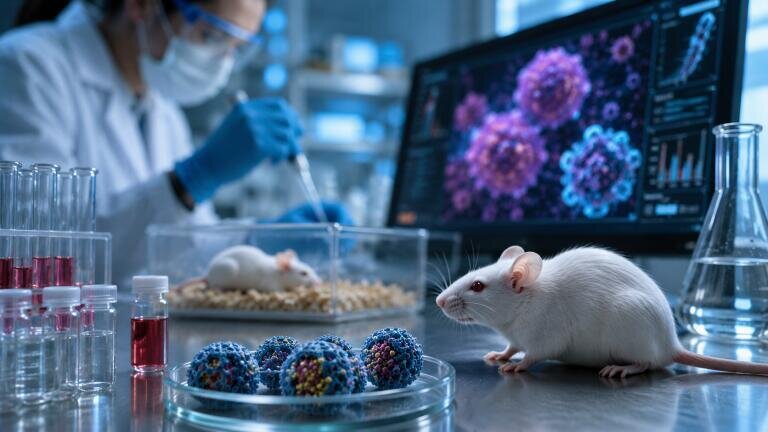
An international research team has developed a nanoparticle-based treatment strategy that could help to address one of the main reasons why chemotherapy fails in patients with cancer.
The study focused on multidrug resistance, a phenomenon in which cancer cells acquire the capacity to expel anticancer drugs before those drugs can exert their therapeutic effect. This process often involves P-glycoprotein (P-gp), a membrane-based drug-efflux pump that reduces the concentration of chemotherapeutic agents inside cancer cells. Once this mechanism becomes active, tumours may no longer respond effectively to treatment, even when the same drugs would otherwise have proved potent.
A research team led by Professor Eijiro Miyako at Tohoku University, Sendai, Japan, developed a strategy to disable this drug-expulsion mechanism before they released the anticancer drug. The work was carried out in collaboration with the group of Dr Alberto Bianco and Dr Cécilia Ménard-Moyon at the French National Centre for Scientific Research in Grenoble and the University of Strasbourg both in France.
The team engineered porous amino acid nanoparticles able to carry both doxorubicin, a widely used anticancer drug, and quinidine, an inhibitor of P-gp. Rather than release both compounds at the same time, the nanoparticles were designed to deliver them in sequence. Quinidine was released first to inhibit the efflux pump, followed by doxorubicin after the cancer cell’s drug-expulsion capacity had been weakened.
“We wanted to first inhibit the expelling action of P-gp before [the] anticancer drugs are introduced, so we developed a … sequential release mechanism to achieve this,” explained Miyako.
“You need to patch up a hole in a leaky bucket before adding … water, instead of trying to do both at the same time,” he said.
The nanoparticles combined three therapeutic functions in a single platform:
The photothermal element used near-infrared laser light to heat the tumour tissue, adding a physical mechanism of tumour destruction to the pharmacological effect of the drugs.
In laboratory experiments on cancer cells, the combined approach exceeded the efficacy of chemotherapy or photothermal therapy alone. In tumour-bearing mouse models with drug-resistant cancer, the three-pronged treatment achieved complete tumour regression and 100 per cent survival, with no detectable toxicity in normal tissues. By contrast, photothermal therapy alone caused only transient tumour regression, followed by recurrence.
The findings suggest that sequential delivery may offer an important advantage compared with earlier attempts to release P-gp inhibitors and anticancer drugs simultaneously. By first suppressing the cancer cell’s drug-efflux system, the nanoparticles allowed the doxorubicin to better flow inside resistant cancer cells.
Multidrug resistance affects many tumour types and remains a major unresolved challenge in oncology. Although the results are preclinical and must be tested further before any clinical use can be considered, the platform could provide a broadly applicable route to restore chemotherapy sensitivity in tumours that have stopped to respond to standard treatment.
“We are hopeful that this approach could become a beacon of hope for patients with cancer one day,” said Miyako.
“The nanoparticles are constructed entirely from amino acid-derived building blocks and biocompatible materials which underscores the potential for clinical translatability in humans,” he concluded.
For further reading please visit: 10.1016/j.jconrel.2026.114954
ILM 51.6 Sept 2026



 Product directory


















,-photo-Karin-Allander.jpg)





.jpg)
