Research news
Charité-led research has surveyed 158 therapists worldwide to identify which patients may be most likely to benefit from psilocybin or lysergic acid diethylamide-assisted therapy with some remarkable and some mixed outcomes
Researchers led by Charité–Universitätsmedizin Berlin have identified patient characteristics that may help to predict whether psychedelic-assisted therapy is likely to benefit people with mental health disorders, amid renewed scientific and clinical interest in substances such as psilocybin and lysergic acid diethylamide (LSD).
The study drew on responses from 158 therapists worldwide who had experience of psychedelic-assisted therapy. The researchers said the work offered one of the first attempts to define – from clinical experience – the profile of a patient who may respond well to such treatment.
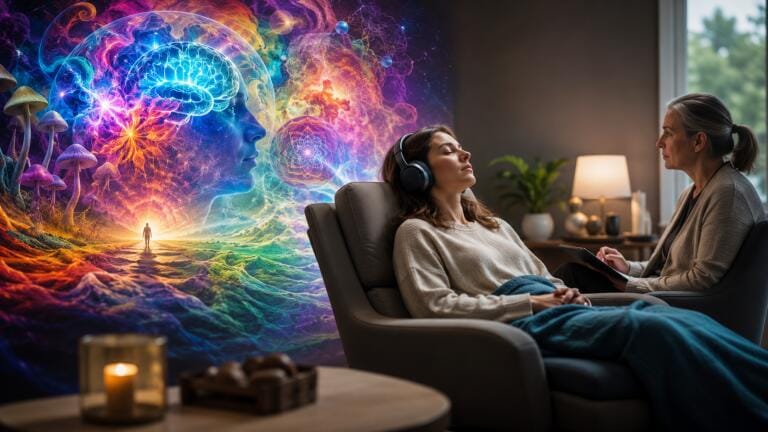
Psychedelic-assisted therapy involves the supervised use of psychoactive substances, usually alongside psychological preparation and follow-up care. Psilocybin, a compound found in some psychoactive fungi, and LSD can alter perception, emotions and consciousness. Research elsewhere has explored their potential use in severe depression, anxiety disorders, addiction as well as other mental health conditions, in particular when conventional treatments have been deemed to fail.
“Treating patients with psychedelic substances is akin to using a sharp blade. [And] with that in mind, it’s very important to know when to use it – and when not to,” said Dr Felix Betzler, who led the study and heads the recreational drugs research laboratory at the Department of Psychiatry and Neurosciences, Campus Charité Mitte, Berlin, Germany.
The researchers described two patients with apparently similar histories but markedly different outcomes. One middle-aged woman had lived with depression for more than a decade, had not responded to medication or psychotherapy and had been unable to work. After a supervised psilocybin session in a controlled study setting, she described a painful but therapeutic emotional breakthrough. Six weeks later, a recognised depression assessment found no measurable signs of the disorder.
A second patient, also a middle-aged woman with depression and comparable personal circumstances, experienced the session as distressing rather than transformative. Her depression did not improve. Instead, she felt greater hopelessness after the treatment.
The contrast, the researchers said, illustrated why patient selection is central to the future of psychedelic-assisted therapy. Although studies have suggested that one or two supervised sessions can produce substantial clinical effects in some patients, outcomes remain markedly variable. Researchers have proposed that psychedelics may increase psychological flexibility – or neuroplasticity – and support altered patterns of neural connectivity but the underlying mechanisms remain incompletely understood.
Betzler and colleagues in Germany, France and the USA surveyed therapists who worked in both regulated and unregulated contexts. The questionnaire examined the therapists’ professional experience, therapeutic approach and clinical setting, as well as patient characteristics such as social circumstances, personality traits, illness severity, previous experience with altered states of consciousness and use (or misuse) of other substances.
“The most important outcome is the overall patient profile as such because, from a therapist’s perspective, this provides an indication of a good treatment response,” said Betzler.
“We identified a number of pronounced characteristics that the respondents agreed on,” he said.
The therapists rated a stable social environment, support from family and friends, openness to experience, the ability to accept and let go of difficult emotions and the capacity to form secure attachments as favourable factors. Previous experience of altered states of consciousness, including through meditation or breathwork, was also considered helpful. By contrast, use of substances such as cocaine, amphetamines, alcohol and cannabis was viewed as a negative influence.
“An openness to novel experiences, the ability to come to terms with certain circumstances, accept them and let them go, and the ability to form secure attachments are all decisive factors,” said doctoral candidate Grace Viljoen, a junior researcher at the Einstein Center for Neurosciences within the department of psychiatry and neurosciences and lead author of the paper.
The study also suggested that personality profile may matter. Therapists considered avoidant, dependent and compulsive personality types more likely to be suitable for psychedelic-assisted therapy. They urged caution for patients with paranoid, schizoid or schizotypal personality types. Narcissistic, antisocial and emotionally unstable borderline personality types were harder to classify.
“The knowledge of which patient profiles are fundamentally suited to this form of therapy – and the profiles that can be harmed – will enable us to better [determine] who receives such therapy. It represents a further step towards precision psychiatry in a highly dynamic field,” Betzler said.
The authors emphasised that psychedelic-assisted therapy should not be viewed as a simple cure. They said success depended on careful preparation, trust between patient and therapist, professional supervision during the session and structured aftercare to help patients process the experience. They also advised that therapy should take place only in specialised centres and – where possible – within clinical studies.
The survey found that therapists who worked outside regulated clinical settings tended to view treatment prospects more optimistically than those in legal or research settings. According to the Charité team, this underlined the need for evidence-based patient selection and careful clinical governance.
“Analysis of data for this sub-group showed that, whether among older people, those with severe illnesses or those with limited social support – and even putting aside previous negative experiences – reservations about using substances in underground settings were significantly lower than in legal settings,” said Betzler.
“In an ideal scenario, the parameters we have identified as being decisive will be used in [all] patient selection in the future,” he added.
The researchers said the findings could support the development of a digital tool to help estimate the likelihood of benefit from psychedelic-assisted therapy. Such a tool would not replace clinical judgement but could help to guide patient selection in a field where therapeutic promise remains closely linked to clinical risk.
For further reading please visit: 10.1038/s44220-026-00642-4
ILM 51.6 Sept 2026



 Product directory



















,-photo-Karin-Allander.jpg)








.jpg)
