Research news
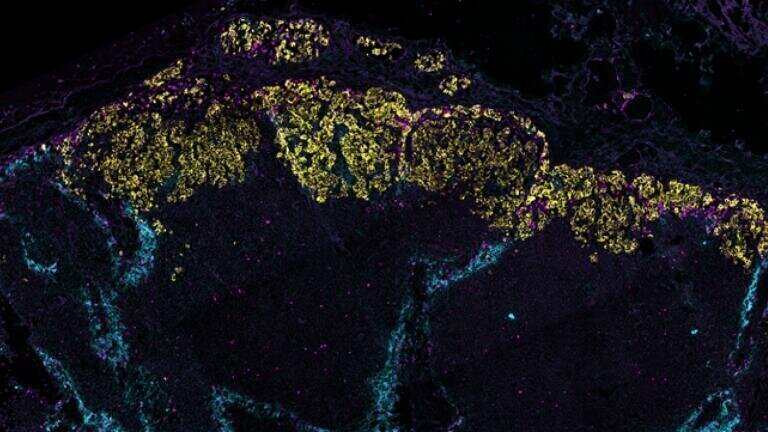
Breast cancer doesn’t just travel through the body — it actively remodels the lymphatic vessels that carry it to nearby lymph nodes, a new study [1] from the University of Turku, Finland, reveals. Understanding this process could open the door to therapies that stop cancer in its tracks.
Metastasis, the spread of cancer to other organs, is the most dangerous aspect of breast cancer. Typically, the first sign is cancer cells appearing in the lymph nodes that drain the tumour site, located in the armpit.
The Finnish team analysed these lymphatic vessels and discovered that breast cancer triggers molecular changes that make it easier for tumour cells to travel into lymph nodes. Central to this process is a protein called Matrix Gla Protein (MGP), previously known for its role in bone formation. The researchers found MGP was highly expressed in lymph nodes affected by metastasis but absent in distant, healthy nodes.
“These results reveal a new perspective on why breast cancer spreads and why stopping it is difficult,” said Academician Sirpa Jalkanen, head of the InFLAMES research consortium. “By understanding how cancer alters lymphatic vessels, we can work toward targeted therapies that block this process and improve patient outcomes.”
The study relied on lymph node samples from breast cancer patients at Turku University Hospital, highlighting the importance of close collaboration between clinicians and researchers. Breast cancer remains one of the most common cancers worldwide, with thousands of new cases diagnosed each year in Finland alone. Early detection remains key, as survival rates are highest when the disease is caught promptly.
The findings appear in Nature Communications, offering a new molecular target in the fight against breast cancer metastasis.
More information online
ILM 51.6 Sept 2026




 Product directory

















,-photo-Karin-Allander.jpg)