Company news
A new Christian Doppler Laboratory at the Medical University of Graz is investigating whether omega-3-based lipid emulsions could enhance the effectiveness and tolerability of chemotherapy in cancer treatment.
Funded by the Austrian Federal Ministry of Economy, Energy and Tourism (BMWET) together with industry partner Fresenius Kabi Austria, the seven-year programme will develop and test novel intravenous nanoemulsions based on omega-3 fatty acids derived from algal oil.
The approach explores the potential of key fatty acids, including DHA and EPA, to influence tumour biology and support the action of established chemotherapies, particularly in cancers that develop resistance during treatment.
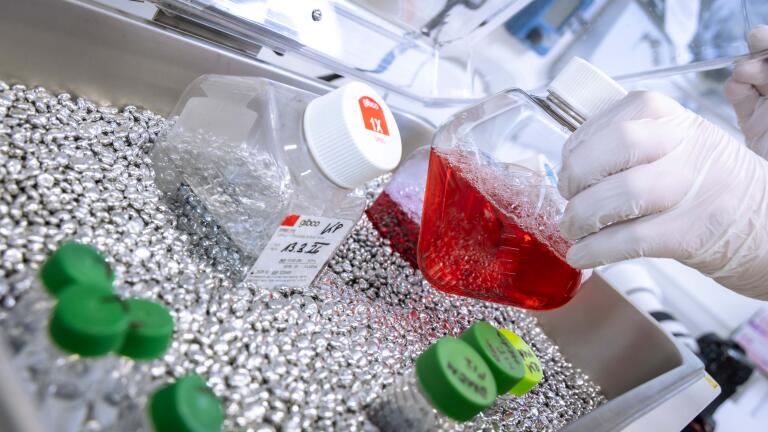
Led by Beate Rinner, the lab will combine formulation research with advanced disease models, including three-dimensional, patient-derived tumour systems that more closely reflect the tumour microenvironment than conventional cell cultures.
“This allows us to investigate the disease under conditions much closer to real ones than in conventional cell cultures,” said Beate Rinner, head of the laboratory.
To assess safety and off-target effects, the team will also use patient-derived heart muscle cells and skin cell models to build a broader toxicity profile of the formulations.
Researchers will additionally study how omega-3-based emulsions interact with the immune system, and whether they may help strengthen the body’s anti-tumour response.
By integrating formulation science with translational cancer models, the programme aims to bridge early mechanistic research and future clinical evaluation.
More information online
ILM 51.6 Sept 2026



 Product directory


.jpg)
.jpg)