Research news
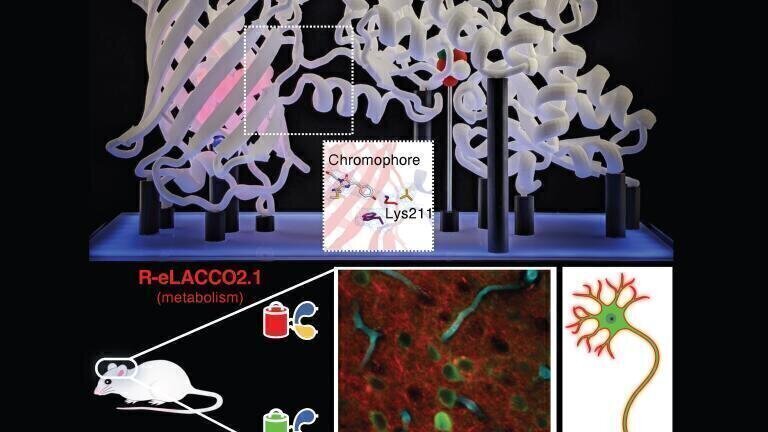
Once dismissed as a metabolic leftover, lactate has re-emerged as one of the brain’s most intriguing molecules — both a vital fuel and a key messenger in neuronal communication. Now, scientists from Academia Sinica and National Taiwan University, working with international collaborators, have unveiled a red fluorescent biosensor that lets researchers watch this process unfold in living brains [1].
The team’s innovation, R-eLACCO2, enables real-time imaging of lactate fluctuations inside cells, tissues, and even awake mice. When paired with a green calcium biosensor, it gives scientists a window into how metabolism and neuronal activity move in step — a feat that was previously out of reach.
“Lactate used to be considered nothing more than a by-product of glycolysis,” said Dr Yusuke Nasu, Assistant Research Fellow at Academia Sinica’s Institute of Biological Chemistry and Adjunct Assistant Professor at National Taiwan University. “But we now know it’s an essential part of how the brain fuels itself and communicates.”
Dr Nasu’s group has spent years refining fluorescent biosensors that track lactate dynamics. Their earlier green-emitting sensors, eLACCO1.1 (Nature Communications, 2021) and eLACCO2.1 (Nature Communications, 2023), broke new ground in monitoring metabolism — but their single-colour design made it difficult to use alongside other green sensors.
The newly developed red version overcomes that barrier. R-eLACCO2 changes its fluorescence intensity in response to lactate levels, offering exceptional versatility across cultured cells, brain slices, and live animals. By combining red and green indicators, researchers can now watch the interplay between energy metabolism and neuronal signalling in real time.
The LACCO series has already reached more than 90 research groups in 19 countries and is freely distributed through Addgene, the Canadian Neurophotonics Platform Viral Vector Core, and the Bloomington Drosophila Stock Center. “Open science is at the heart of what we do,” Dr Nasu added.
Looking ahead, the team aims to expand the LACCO colour palette and develop similar sensors for other metabolites — shedding new light on how cells regulate and communicate energy throughout the body.
More information online
ILM 51.6 Sept 2026




 Product directory



















,-photo-Karin-Allander.jpg)