Research news
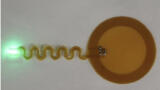
A miniature £20 device using ultrasound to induce chemical reactions at the microscale could pave the way for decentralised fertiliser production - offering a low-cost, low-resource alternative to traditional nitrate synthesis.
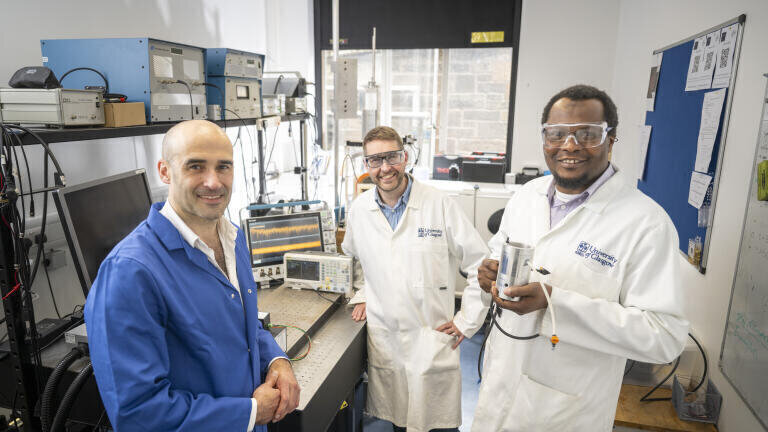
Researchers at the University of Glasgow have developed a sonochemical microreactor that uses ultrasound-driven cavitation to convert nitrogen and oxygen from air into plant-ready nitrate. This breakthrough harnesses bubble implosion dynamics - captured and optimised using high-speed imaging - to replicate reactions typically requiring high-pressure industrial processes.
By pulsing focused ultrasound through air-saturated water, the team triggered microscale hot spots inside collapsing bubbles, reaching temperatures as high as 5000°C. These fleeting, extreme conditions were sufficient to break molecular nitrogen and recombine it with oxygen - creating nitrate molecules without relying on fossil fuels or the high energy inputs of the Haber-Bosch process.
The research [1], published in Cell Reports Physical Science, describes how optimised pulsed ultrasound - 4 ms bursts every 80 ms - maximised nitrate yield. High-speed visualisation of bubble behaviour was crucial for refining this timing.
In proof-of-concept tests, the team’s palm-sized reactor achieved 40 μM nitrate in 20 ml of water within eight minutes. Though modest, the result marks a significant advance in sonochemistry and microreactor design, with the potential for field-deployable fertiliser production in low-resource or off-grid settings.
According to the team: “We’ve shown that nitrates can be produced from air and water using a simple, low-cost device powered only by sound waves. This could decentralise fertiliser production, letting farmers in remote areas press a button and create fertiliser on demand.”
The next phase will focus on scaling the technology and improving energy efficiency, while also assessing the agricultural performance of the nitrate produced.
The research was supported by funding from the Engineering and Physical Sciences Research Council (EPSRC) and the Royal Society.
More information online
1. Towards decentralized nitrogen fixation using pulsed ultrasound published in Cell Reports Physical Science
ILM 51.6 Sept 2026



 Product directory



















,-photo-Karin-Allander.jpg)




.jpg)
