Research news
A European consortium led by VTT Technical Research Centre of Finland has developed a machine vision system that mimics how the human eye and brain work — bringing intelligence directly into devices while drastically reducing energy use.
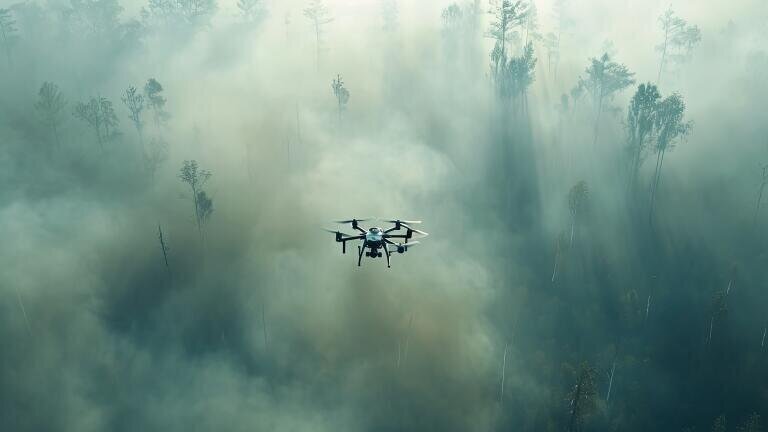
The MISEL project (Multispectral Intelligent Vision System with Embedded Low-Power Neural Computing), funded by the EU’s Horizon 2020 programme, has created neuromorphic circuits that process visual data at the edge. This allows robots, drones, and smart cameras to interpret their surroundings in real time without relying on cloud computing or heavy batteries.
“Our aim was to build devices that can see, understand, and act independently,” said Jacek Flak, MISEL project coordinator at VTT. “By replicating the retina and brain’s approach to vision, we can cut power use by hundreds or even thousands of times compared with conventional digital systems.”
The system integrates imaging, processing, memory, and AI algorithms on a single chip. High-speed, high-dynamic-range sensors detect motion and changes — not static frames — producing compressed, actionable data. Quantum dot sensors extend vision into the infrared, enabling devices to operate in low light or fog.
MISEL’s technology has applications ranging from autonomous drones conducting rescue missions to industrial robots navigating safely among humans. The co-designed hardware and software platform ensures devices are compact, fast, and energy-efficient, ready for real-world deployment.
Project partners include universities in Finland, Sweden, Germany, Spain, and France, along with Kovilta Oy and AMO GmbH. Their combined expertise in materials science, electronics, and AI pushes machine vision closer to the efficiency of biological systems.
“With these chips, devices can respond to their environment almost as efficiently as a fruit fly — tiny, autonomous, and incredibly fast,” Flak added.
More information online
ILM 51.6 Sept 2026


 Product directory


.jpg)
.jpg)
















,-photo-Karin-Allander.jpg)