Mass spectrometry & spectroscopy
Published over 4 years ago. See the latest and most current information on Mass spectrometry & spectroscopy.
From carton milk to ready-to-eat meals, Aerobic Plate Count (APC) is used to estimate bacterial populations and assess the quality of food and beverage products. As a generic test, results offer an indication of how many microorganisms are present in the sample and if concentrations pose a risk to consumers.
Below, we take a closer look at some of the best-practice methods used to calculate Aerobic Plate Count.
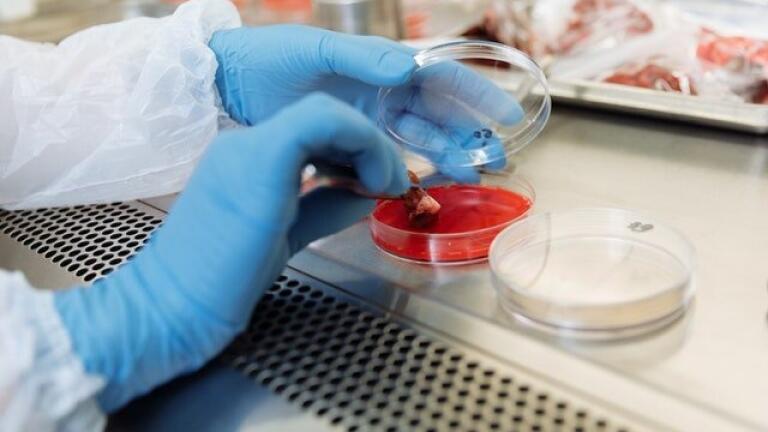
For the Conventional Plate Count method, a nutrient-rich agar is prepared and poured into a Petri dish. The sample is added to the dish and allowed to solidify at room temperature before being autoclaved at temperatures of between 20°C and 45°C. These mesophilic temperatures allow aerobic bacteria to thrive and create visible colonies.
Used to assess bacterial populations in food, milk and cosmetics, the Spiral Plate Count method is endorsed by bodies such as the American Public Health Association (APHA). The method uses a mechanical plater to dispense a liquid sample onto the centre of a rotating agar plate. Sample volume decreases as the dispenser moves towards the outer edge of the plate. Bacterial populations are estimated by counting the colonies that form on the Petri dish, then dividing results by volume.
Aerobic Plate Count is a useful way to assess bacterial populations however the preparation process can be labour-intensive. To address the issue, many laboratories rely on Petrifilm™ plates. The solution replaces traditional agar methods with pre-prepared plates that are ready to receive samples. Over the past year, product developers have enhanced the value of Petrifilm™ plates with automated technologies like the 3M Petrifilm Plate Reader Advanced. Featuring a five-megapixel camera and built-in bar code reader, the award-winning device uses artificial intelligence to interpret results.
“All of us at 3M Food Safety are incredibly grateful to receive this award honouring our innovations in food safety technology that enable labs to produce reliable results with operational efficiency," says 3M Food Safety global portfolio manager, Mario De La Torre. “The 3M Petrifilm Plate Reader Advanced has been a critical tool for alleviating some of the stress felt by laboratories amid ongoing labour shortages with its impressive time-saving features.”
Aerobic Plate Count is one of many techniques used to assess the microbial quality of food and beverage products. To find out more about other widely used methods, including Coliform count to detect pathogens such as E. coli, Citrobacter freundii, Enterobacter cloacae, Enterobacter aerogenes and Klebsiella pneumoniae, don’t miss ‘Bacteria in Food - Types, Testing & Problems’.
ILM 51.6 Sept 2026



 Product directory