News
Published over 8 years ago. See the latest and most current information on News.
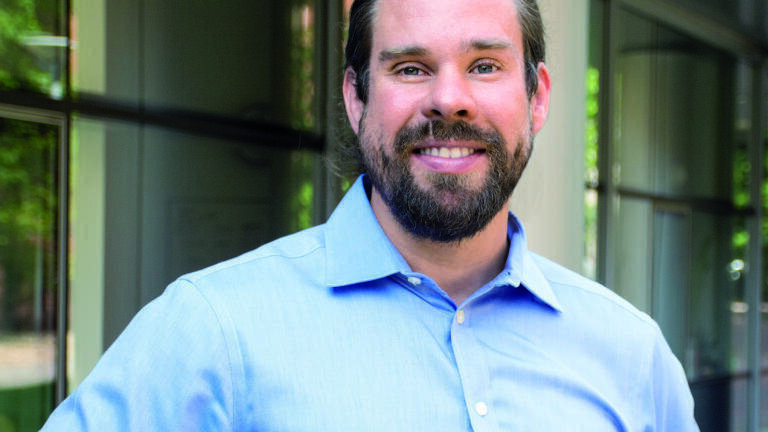
The German scientist Johannes Kohl, PhD has won the 2018 Eppendorf & Science Prize for Neurobiology for his work on neural mechanisms underlying parental care.
Johannes Kohl carried out his research in the laboratory of Catherine Dulac at Harvard University. His work has revealed how a small population of genetically defined neurons controls the motor, motivational, hormonal, and social aspects of parental behaviour in male and female mice. Previous work had implicated specific neurons in parenting located in the medial preoptic area (MPOA) of the hypothalamus (a brain area that shares common features with other vertebrates). However, it remained unclear how a small group of neurons could control such a complex social behaviour. First, using anatomical techniques, Johannes Kohl revealed that these neurons form a hub in a complex, brain-wide parenting network. Subsequently, he used imaging approaches to visualise the activity of these MPOA neurons during parenting and manipulated their function in behaving animals. Together, these experiments revealed that MPOA neurons form subpopulations, each controlling different aspects of parenting. This discovery provides a new model for how specific components of a social behaviour are generated at the neural circuit level. Unravelling the functional architecture of such circuits will advance our understanding of how the brain coordinates complex behaviours. In 2019, Johannes Kohl will start his own group at the Francis Crick Institute in London. He will investigate how physiological states affect information processing in neural circuits.
The annual US$25,000 Eppendorf & Science Prize for Neurobiology honours scientists, like Dr Kohl, for their ground-breaking research. Johannes Kohl is the 17th recipient of this international prize which is awarded jointly by Eppendorf and the journal Science. Researchers who are 35 years of age or younger and have made outstanding contributions to neurobiological research based on methods of molecular and cell biology are invited to apply. The next deadline for applications is 15 June 2019.
For more information about Dr Kohl and the Eppendorf and Science Prize for Neurobiology, visit www.eppendorf.com/prize.
ILM 51.6 Sept 2026

 Product directory