Chromatography
Published over 4 years ago. See the latest and most current information on Chromatography.
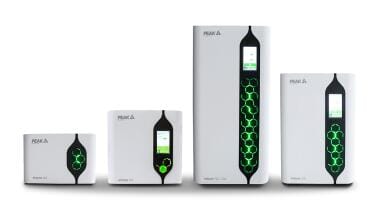
Hydrogen generators are one of the most efficient and cost-effective investments a laboratory can make. They’re used across a wide range of industries and sectors, including food analysis, environmental monitoring and forensics. At the touch of a button, laboratory technicians can generate pure, high-quality hydrogen on demand. They’re not only more economic than traditional high-pressure gas cylinders, but safer.
Want to know more? Below, we take a closer look at the different applications for hydrogen generators in laboratories.
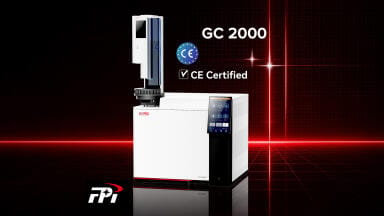
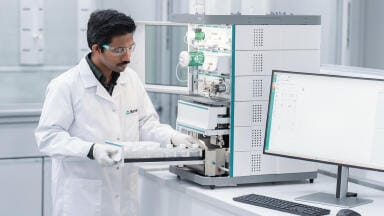
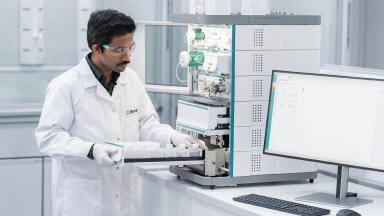
Gas Chromatography (GC) is one of the most useful techniques available to laboratory scientists. The analytical technique separates mixtures into individual chemical components, usually in the form of organic molecules and gases. Hydrogen generators have an important role to play when it comes to operating Gas Chromatographs. Primarily, they supply the hydrogen needed to operate the Flame Ionisation Detector (FID) built into the instrument.
Here are just a few applications for Gas Chromatographs and hydrogen generators in laboratories.
Gas Chromatography is a workhorse in the food and beverage sector. Hydrogen generators power GC instruments used to detect volatile organic components in products and ensure they meet strict health and safety requirements. When it comes to labelling, Gas Chromatography is used to calculate nutritional content. GC is also used to combat food fraud, which can cost the industry as much as US$40 billion per year, according to the FDA.
Forensic science laboratories rely on Gas Chromatographs to carry out toxicology screenings and detect drugs, alcohol and other substances. Hydrogen generators provide the sophisticated instruments with the gas needed to separate and identify individual elements.
Laser Ablation-Inductively Coupled Plasma Mass Spectrometry (LA-ICP-MS) is another technique employed by forensic scientists. Like Gas Chromatographs, the instruments require a steady stream of high-quality hydrogen. Hydrogen generators step up and provide forensic scientists with the gas they need to operate LA-ICP-MS instruments and carry out tasks like examining glass fragments found at crime scenes.
Air pollution is a global crisis, with the World Health Organisation (WHO) estimating it causes up to 7 million premature deaths every year. Gas Chromatography instruments are used to analyse air samples and detect atmospheric pollutants. Data is used to develop air pollution management strategies.
With such a wide range of applications, it’s no surprise the market for hydrogen gas generators is rapidly growing. Find out more about the benefits of hydrogen gas generators, including the potential to streamline workflows, reduce overhead costs and improve occupational health and safety, in our complete guide, ‘Laboratory Generators - Everything You Need to Know’. Or check out 'Optimising Bioreactor Yields with Smart Sensors' for more on the latest laboratory developments.
ILM 51.6 Sept 2026


 Product directory