Gas chromatography
Published over 4 years ago. See the latest and most current information on Gas chromatography.
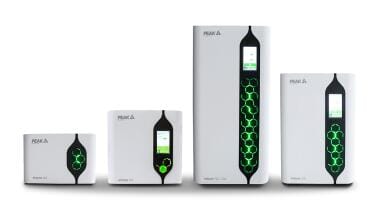
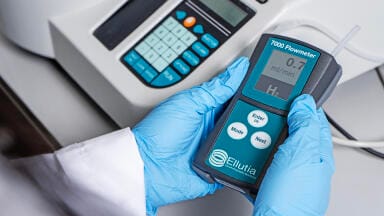
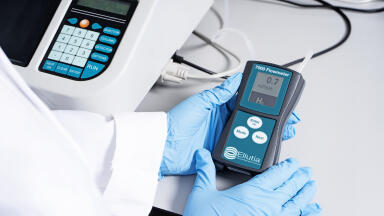
Colourless, odourless and invisible to the naked eye, hydrogen is a simple yet incredibly useful chemical element. It’s abundant in the universe and accounts for around 75% of all matter, including stars, water and atoms in the human body. While hydrogen is widely available, isolating the chemical element is another matter. This is where hydrogen gas generators step up.
On Earth, water (H2O) is one of the most convenient sources of hydrogen. The liquid is made up of two hydrogen atoms and one oxygen atom, attached by covalent bonds. Most hydrogen gas generators break these covalent bonds and split H2O molecules using a process called water electrolysis.
Powered by electricity, the devices contain an electrolyser cell with an anodic and cathodic catalyst separated by a polymer-electrolyte membrane (PEM). Applying steady voltage to the electrolyser cell triggers a series of reactions. Oxygen atoms are attracted to the anodic catalyst while hydrogen atoms move to the cathodic catalyst. The atom isolation process allows the gas generators to produce pure, high-quality hydrogen almost instantaneously.
All hydrogen gas generators are designed to produce lab-standard gas, though purity levels do vary between models. For applications where purity is a priority, a platinum catalyst is used. Generators of this calibre can produce hydrogen with purity as high as 99.9995%.
Now we know more about how hydrogen gas generators work and the benefits they offer to laboratory personnel, let’s take a look at some different applications.
The US Food and Drug Administration (FDA) estimates food fraud costs the industry a huge US$40 billion per year. Hydrogen generators provide gas to the chromatographs used to trace the origins of food products and determine authenticity. Along with Visible Spectroscopy, Gas Chromatography is one of several analytical techniques used to tackle the global food fraud issue.
Forensic scientists rely on hydrogen generators to operate Gas Chromatographs used to carry out toxicology reports. The sophisticated instruments separate individual elements from samples and are used to identify alcohol, drugs, poisons and other substances.
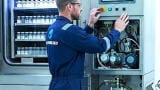
From detecting contaminants in samples to analysing the quality of finished products, Gas Chromatography is widely used in the oil and gas sector. The analytical technique is used to separate a sample into individual components and generate a molecular fingerprint. Data is used to monitor refinery stream operations, carry out quality control analysis and maximise yields.
Want to know more about why the market for hydrogen generators, as well as other laboratory gas production devices, is set to grow over the next decade? Find out more in our complete guide to the workflow-enhancing devices in ‘Laboratory Generators - Everything You Need to Know’. Or check out 'Optimising Bioreactor Yields with Smart Sensors' for more on the latest laboratory developments.
ILM 51.6 Sept 2026


 Product directory